


July 9th
Saint Veronica Giuliani
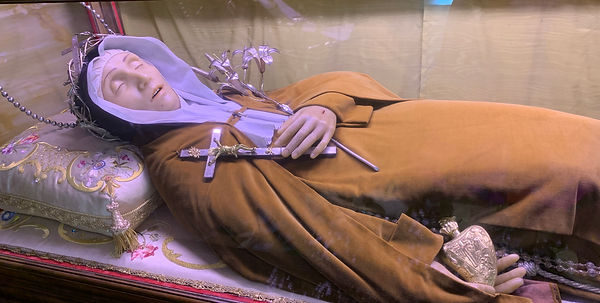
Spiritual formation towards virtues according to Saint Veronica Giuliani:
The path of Christian perfection and spiritual growth is not only the work of human effort, but above all the fruit of the profound action of God's grace in the soul. Saint Veronica Giuliani, a great mystic and teacher of the spiritual life, left us an invaluable legacy on how to form ourselves towards virtue. Her spiritual legacy shows the path on which man becomes an instrument of God and reflects the holiness of the Creator himself.
1. Complete surrender to God and the desire to belong to Him.
The cornerstone of formation in virtue is complete surrender to God and a sincere desire to be wholly God's. Saint Veronica emphasized that the soul that wants to be sanctified must constantly have its mind on God and its main life effort should be the desire to always please the Lord God. Self-will and ego are the greatest obstacles on this path, because they pollute the works of virtue and introduce human pride and self-love into them.
"I say to myself: - God of my soul, love yourself with your love for me, because there is no other way for me to love you. Creation by itself can do nothing... So I will be content with loving you with your Love." - St. Veronica Giuliani
2. The action of God and the cooperation of the soul.
True virtues are not just the result of our moral discipline. God instills virtues in us and teaches us, shows us how to practice them. However, our effort has an irreplaceable place in the form of cooperation with this grace of God.
● Attention and concentration: The soul must cooperate - it must be attentive and focused on the voice of God within itself.
● Purity of intention: All actions must be performed with pure intention, without seeking self.
3. Meditation and contemplation of the crucified Jesus.
For Saint Veronica, the most effective school of virtue is meditation and contemplation of the crucified Jesus and his holy Passion. The sight of the suffering Christ transforms the heart and instills in it the fundamental virtues:
● Humility before the greatness of God's sacrifice.
● A love that surpasses human understanding.
● Surrender to the Father's will even in suffering.
● Silence and patience.
● Kindness and gentleness towards others.
● Prayer for crucifiers and those who harm us.
4. Virtues as spiritual weapons and essential pillars.
Saint Veronica saw the spiritual life as a constant struggle. She reminded us that virtues are a weapon against all hell. The evil spirit has no power over a soul armed with true virtues.
Key weapons and attitudes to adopt include:
● Prayer as the life-giving breath of the soul.
● Faith and hope that sustain us in dark moments.
● Self-contempt and self-denial, which destroy pride.
● Mortification of the senses and one's own passions.
Formation in virtues according to Saint Veronica Giuliani is not a path of human Perfection, but a path of profound humility and influence by God's love. When a person puts aside his ego, places himself completely in God's hands and allows himself to be guided by the crucified Christ, his life becomes a constant praise of the Creator and a strong bulwark against evil.
Biography of Saint Veronica Giuliani.
Saint Veronica Giuliani (real name Orsola Giuliani), a Capuchin nun, mystic, and great saint of the Catholic Church, was born on December 27th, 1660, in the Italian town of Mercatello sul Metauro.
Key moments from life:
● Youth and religious vocation: From early childhood she showed a deep piety and a strong love for the suffering of Jesus Christ. At the age of 17 she entered the strict convent of the Poor Clares-Capuchins in Città di Castello, where she arrived a year later with the religious name Veronica (in honor of Saint Veronica).
● Mystical gifts and stigmata: Her spiritual life was marked by extraordinary mystical experiences. In 1694 she received the grace of stigmata - bearing on her body the wounds of Christ's passion, including the crown of thorns and a pierced heart. For many years she bore these gifts in secret and with great humility, although she also underwent strict ecclesiastical investigations.
● Religious service: She held various responsible positions in the monastery, especially the office of Magister of novices (16 years), in which she formed young religious sisters with great love and wisdom, and later was elected abbess of the monastery (she served until her death).
● Death and legacy: She died on July 9th, 1727 in Città di Castello after a long and painful suffering. Her life is a model of deep prayer, sacrifice for sinners, and perfect self-denial.
She was declared a saint by Pope Gregory XVI in 1839. Her liturgical memorial falls on July 9th.